Your fifteen-minute break has started. You have already spent four minutes deciding how to spend it. This is, spiritually, another meeting.
Do not donate the remaining eleven minutes to an infinite feed. These quick browser games begin with a tap, a choice, or a very understandable act of popcorn-based correction. Stack ceramic layers, find illustrated words, merge fruit stickers, compare the speed of a snail and a rocket, or let eight questions explain what the city has done to you. When the break ends, most of them can end too. Tidewords will even remember where you were.
StackStop
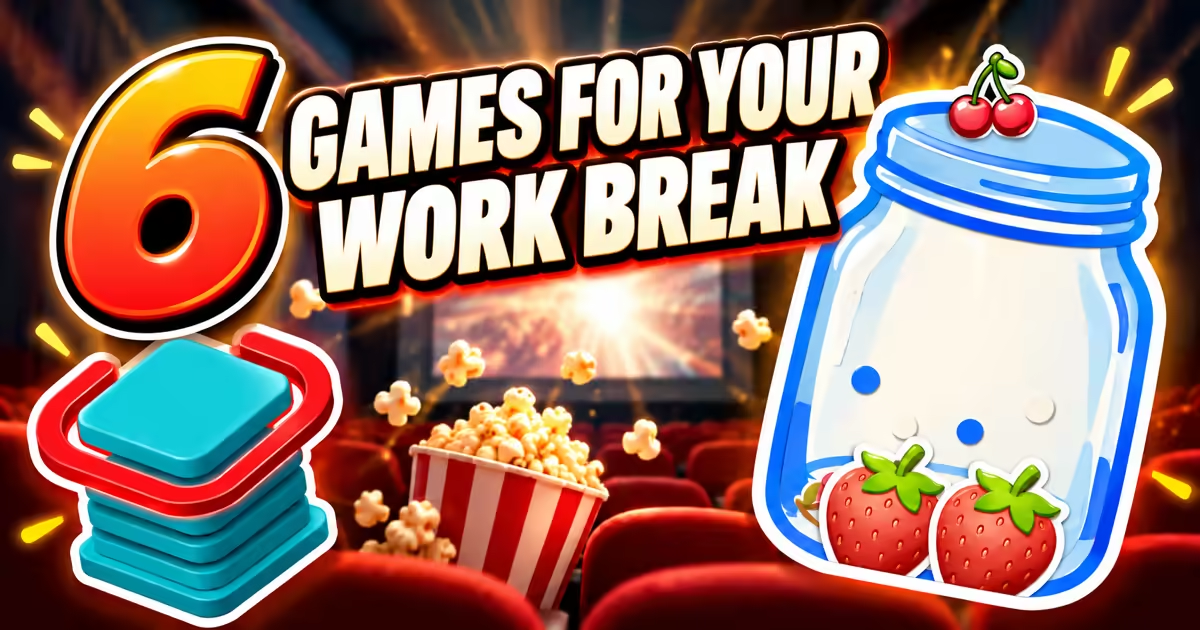
StackStop gives you a ceramic layer swinging across the screen and one job: tap STOP when it sits inside the red outline. A centered layer earns a perfect hit, an edge can still count as good, and a miss breaks the piece. The scoreboard records your streak, each layer result, and the coupons earned by a clean run.
That is an excellent break-time contract. The objective is visible before you touch anything, the action takes one tap, and the result arrives without a loading screen for your personal mythology. Of course, “one tap” becomes psychologically complicated as soon as a streak exists. A number above two can turn anybody into a ceramic air-traffic controller.
Pick StackStop for the shortest gap between tasks. A round can deliver several small wins without asking you to remember a map or inventory. The only caution is that precise timing wants your attention; this is not the game to play while also composing a reply that begins “Just circling back.”
Popcorn Justice
Popcorn Justice screens a black-and-white western while rude patrons interrupt with glowing phones, standing silhouettes, kissing, and crying babies. Aim and throw popcorn in a parabolic arc at the offenders. Hit an innocent viewer, however, and the Audience Patience meter drops. The film advances through 10 frames before your score and cinema-guardian rating arrive with the credits.
It is target practice built from a very specific fantasy: finally being allowed to respond when somebody turns maximum brightness on during the movie. The game adds enough restraint to keep the premise interesting. Popcorn is justice only when correctly addressed; otherwise you are simply another incident in row G.
This is the liveliest option for a break that needs a clean mood change. The moving disruptions and innocent bystanders demand more focus than StackStop or a quiz, and sound belongs to the cinema setup, so headphones are sensible. Play one film, accept the rating, and return to work before righteous fury acquires a sequel.
Tidewords
Tidewords is an illustrated word puzzle organized into themed books. Visual clues point toward hidden words, letter hints can loosen a stuck answer, and a timer tracks the session. Progress is saved, while completed work adds collectible keepsakes rather than disappearing the moment the last word lands.
The saved progress is what makes it useful at work. A puzzle does not become collateral damage when the calendar announces that your break was merely a rumor. You can find a few words, close the page, and return later without rebuilding the scene from memory. The timer may know you left. It does not have escalation privileges.
Choose Tidewords when you want the break to engage the language part of your brain without opening a document. It is less instant than a one-button timing game because clues deserve a moment, but hints keep a stubborn word from consuming the rest of the afternoon. This is the list's best option for several small breaks across one day.
Fruit Sticker Pop
Fruit Sticker Pop asks you to tap and drop fruit stickers into a container. Matching fruit merges and climbs the visible evolution tiers from Cherry through Strawberry, Orange, Apple, and Watermelon. The page shows your score, previews the next fruit, and warns about overflow before offering Play Again.
The controls are immediate, but the container slowly turns into produce logistics. A harmless cherry arrives. Then another. Soon an orange is blocking a merger and you are studying the available airspace as though the watermelon has submitted zoning paperwork.
This is the smoothest choice when you want repetitive, satisfying motion rather than a written challenge. You can leave after one score or restart for a cleaner stack. The danger is not complexity; it is the classic merge-game belief that the next drop will repair every decision below it. Set the break timer before the fruit begins negotiating.
How Fast?
How Fast? lets you pick four competitors from categories including animals, land travel, and flight, then watch them race using real-world reference speeds in miles per hour. The default lineup puts a cheetah, bullet train, supersonic jet, and rocket on the track; the wider picker ranges from a snail and tortoise to human runners and machines.
Because the speeds are visually scaled, the entertainment comes from combinations as much as winners. Put a snail beside a rocket and the race becomes less “Who will win?” than “Will the camera continue acknowledging the snail's professional contribution?” It will. Respectfully.
How Fast? is ideal for a quick break because choosing the lineup is most of the decision-making and the race supplies the payoff. It is closer to an animated comparison than a skill game, so look elsewhere if you want to steer. Come here when four completely incompatible entrants sound like exactly enough science for the afternoon.
What Kind of City Dweller Are You?
What Kind of City Dweller Are You? runs through eight everyday urban scenarios and sorts your answers into one of six archetypes. The opening previews labels including Coffee Mode, Slack Master, and Social Stealth, while the result adds a quote, feature report, and colorful retro share card.
Eight questions is short enough to fit between calls and long enough to generate an answer you can object to with evidence. That is the traditional purpose of an online personality quiz: request judgment, receive judgment, then appeal the ruling in the group chat.
Choose this when your hands want a quiet series of buttons rather than precise timing. The result is the endpoint, so replay is mostly for testing alternate answers or confirming that yes, the coffee outcome was not a statistical accident. The quiz is aimed at recognizable city-work routines; its archetypes will land best if commuting, deadlines, and strategic social invisibility are already in your vocabulary.
Use StackStop for two focused minutes, Popcorn Justice for a louder reset, Tidewords for progress you can keep, Fruit Sticker Pop for a merge loop, How Fast? for a tiny spectacle, or the city quiz when you would like your break to issue a diagnosis.
Now close the tab with dignity. You still have enough time to get water, and water has never once asked you to accept cookies. For another short list, try these quick browser games you can play in a few minutes.